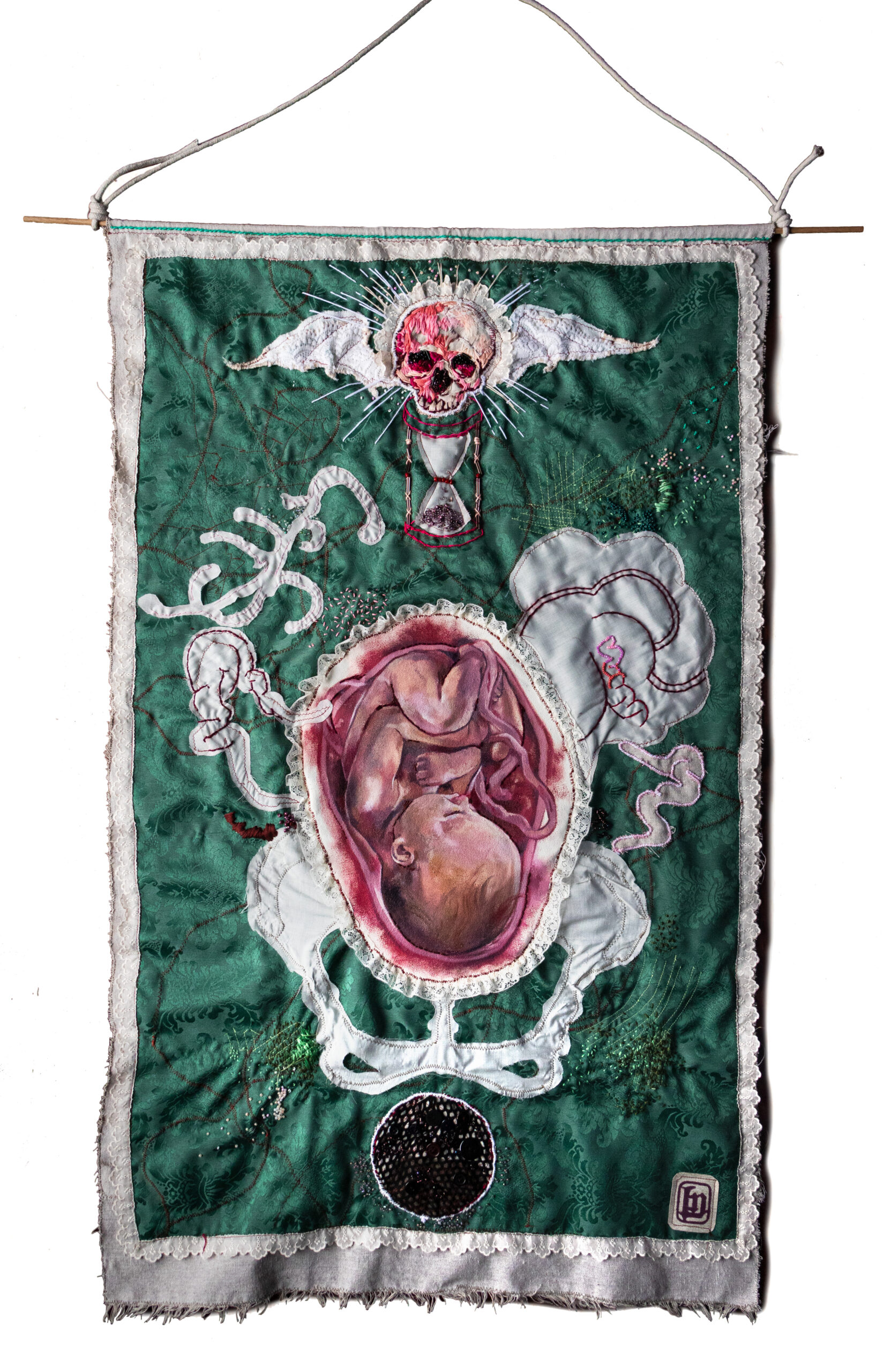
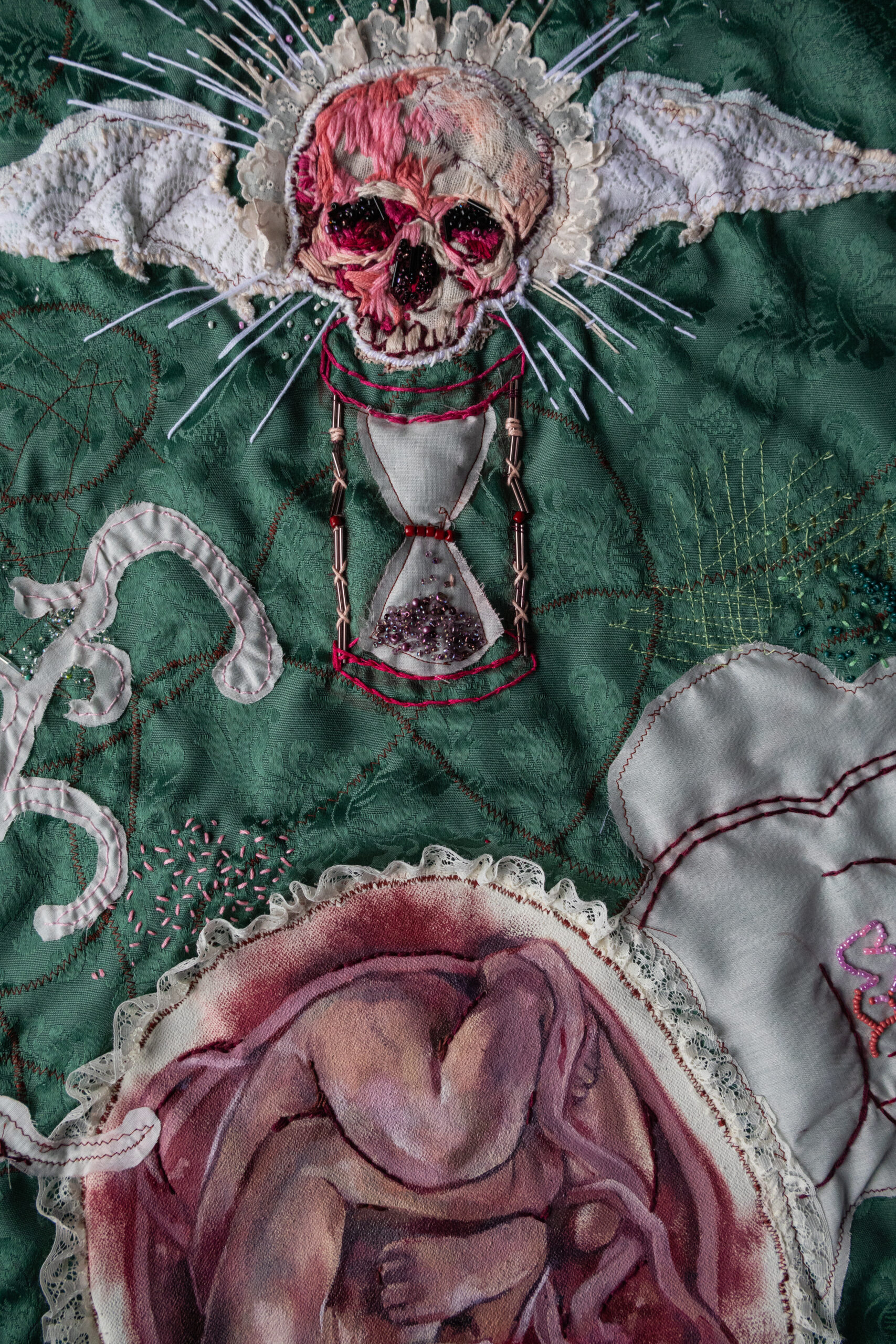
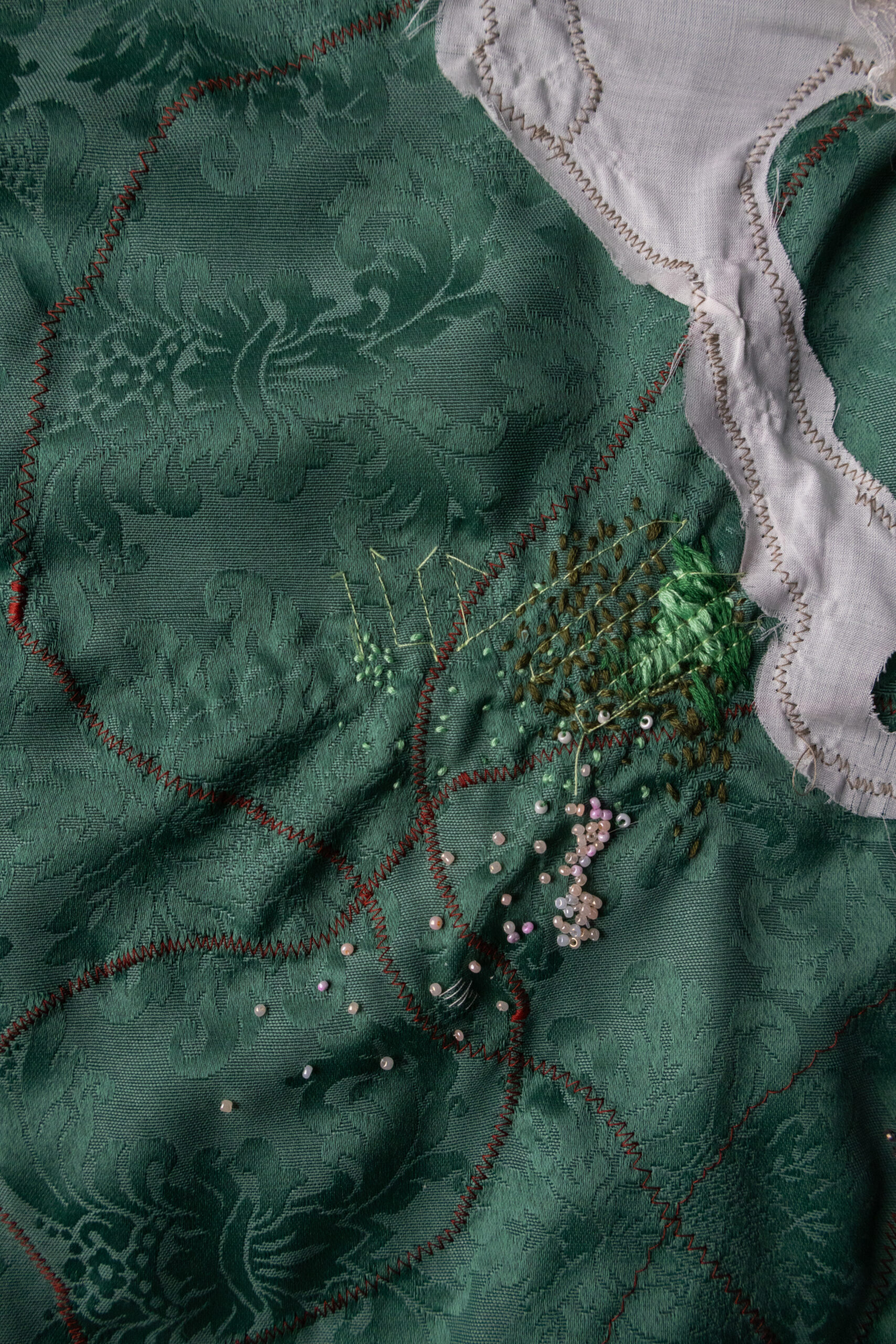
“Nacer hasta morir”
Óleo y bordado sobre tela
103×61 cm
2025
Texto de artista
“No corremos hacia la muerte; huimos de la catástrofe del nacimiento. Nos debatimos como sobrevivientes que tratan de olvidarlo. El miedo a la muerte no es sino la proyección hacia el futuro de otro miedo que se remonta a nuestro primer momento”
-E.M. Cioran (1973) “Del inconveniente de haber nacido”
No hablamos de superación, tampoco de una lucha en contra, ni siquiera de rendición, solo se trata de reconocer que no tenemos ni idea. La necesidad obsesiva del ser humano por descubrir la verdad del sentido de nuestra existencia puede que se halle en la incapacidad de aceptar que quizás sea la nada como el todo. Esto no implica sumir al individuo en un nihilismo irresoluble, pero si enfrentarlo con una realidad en la que ese sentido simplemente debe de ser vivido y no encontrado.
E. M. Cioran argumenta que tanto sufrimiento en vida no es sino un distanciamiento del verdadero inicio de todo mal: el nacimiento. Aparece un anhelo por un tiempo atrás, no un tiempo de pasado, sino un tiempo en donde el tiempo no existía, ese momento anterior al nacimiento. Es fácil cuestionarse cómo es llegar hasta esta lógica ciertamente triste e incluso suicida si no se analiza de forma adecuada. El pesimismo de Cioran es una de las mil formas que existen de enfrentar la experiencia. Cierto es, que esta visión está afectada por circunstancias, traumas o simplemente una vida que no todos poseen, pero ¿Qué es la experiencia vital sino una lucha por buscar la más agradable existencia posible? Schopenhauer la enfrentaba desde una aceptación dolorosa de la supervivencia, Nietszche, en cambio, proponía más que una existencia vaga, una lucha por la superación personal. Sin embargo, hoy en día es complejo hallar una manera de experimentar la vida con la cosmovisión que gozamos y sufrimos. Es un punto en el que resulta difícil imaginar un futuro que no vaya peor, en donde desde el privilegio, si es que lo tenemos, afirmamos el dolor del mundo desde una lejanía expectante. En un lugar en el que reina una atosigante inflación icónica, bombardeos de noticias, polarización, desastres que destruyen familias, genocidios, guerras o gobiernos que no nos representan, no es de extrañar que puedes sentirte afortunado si tus padecimientos mentales no se vean atacados por la situación o si tienes la fuerza para vivir sin caer en la agonía del pensamiento analítico.
De igual forma es complejo considerar la aceptación como forma de vida ¿Acaso podemos llamar vida a tener que acostumbrarnos a vivir en la desesperación? Vemos una extraña, a la par que dolorosa, aceptación de la que hablaba Beksinski al ver la vida como una espera del final, una costumbre a la depresión, la misma que llevaría a la muerte a su hijo. Regocijarse en un pasado inexistente, o al menos, inteligible como lo es el no nacimiento no es la solución, como ya se ha mencionado, tampoco se trata de buscarla.
Como artista, joven, estudiante, mujer y persona, se muestra una forma de sentir y de vivir con la oleada de información, conflictos, guerras y políticas a los que se le suman los dramas propios, y no se promete una lucha contra un enemigo ya inmaterial, sino una vaga conciencia y lamento personal que pueda convertirse algún día en un sueño mucho más bello.
Artist’s text
“We do not run towards death; we flee from the catastrophe of birth. We struggle like survivors trying to forget it. The fear of death is nothing more than the projection into the future of another fear that dates back to our first moment.”
-E.M. Cioran (1973) “The Trouble with Being Born”
We are not talking about overcoming, nor about fighting against, nor even about surrender; it is simply a matter of recognising that we have no idea. The obsessive need of human beings to discover the truth about the meaning of our existence may lie in our inability to accept that perhaps nothingness is everything. This does not mean plunging the individual into irresolvable nihilism, but rather confronting them with a reality in which that meaning must simply be lived and not found.
E. M. Cioran argues that so much suffering in life is nothing more than a distancing from the true beginning of all evil: birth. There appears a longing for a time gone by, not a time in the past, but a time when time did not exist, that moment before birth. It is easy to question how one arrives at this logic, which is certainly sad and even suicidal if not analysed properly. Cioran’s pessimism is one of the thousand ways of facing experience. It is true that this view is affected by circumstances, traumas or simply a life that not everyone has, but what is life experience if not a struggle to seek the most pleasant existence possible?Schopenhauer faced it from a painful acceptance of survival, while Nietzsche, on the other hand, proposed more than a vague existence, a struggle for self-improvement. However, today it is difficult to find a way to experience life with the worldview we enjoy and suffer. It is difficult to imagine a future that will not get worse, where from our privileged position, if we have one, we affirm the pain of the world from a distant perspective. In a place where overwhelming iconic inflation, news bombardment, polarisation, disasters that destroy families, genocide, wars, and governments that do not represent us reign, it is not surprising that you may feel fortunate if your mental suffering is not attacked by the situation or if you have the strength to live without falling into the agony of analytical thinking.
Similarly, it is difficult to consider acceptance as a way of life. Can we really call it life when we have to get used to living in despair? We see a strange, yet painful, acceptance that Beksinski spoke of when he viewed life as waiting for the end, a habit of depression, the same one that would lead to his son’s death. Rejoicing in a non-existent past, or at least one that is intelligible, such as non-birth, is not the solution, as already mentioned, nor is it a matter of seeking it.
As an artist, young person, student, woman and individual, she shows a way of feeling and living with the flood of information, conflicts, wars and politics, to which her own dramas are added, and she does not promise a fight against an already immaterial enemy, but rather a vague awareness and personal regret that may one day become a much more beautiful dream.
-Laura Nogales
“No corremos hacia la muerte; huimos de la catástrofe del nacimiento. Nos debatimos como sobrevivientes que tratan de olvidarlo. El miedo a la muerte no es sino la proyección hacia el futuro de otro miedo que se remonta a nuestro primer momento”
-E.M. Cioran (1973) “Del inconveniente de haber nacido”
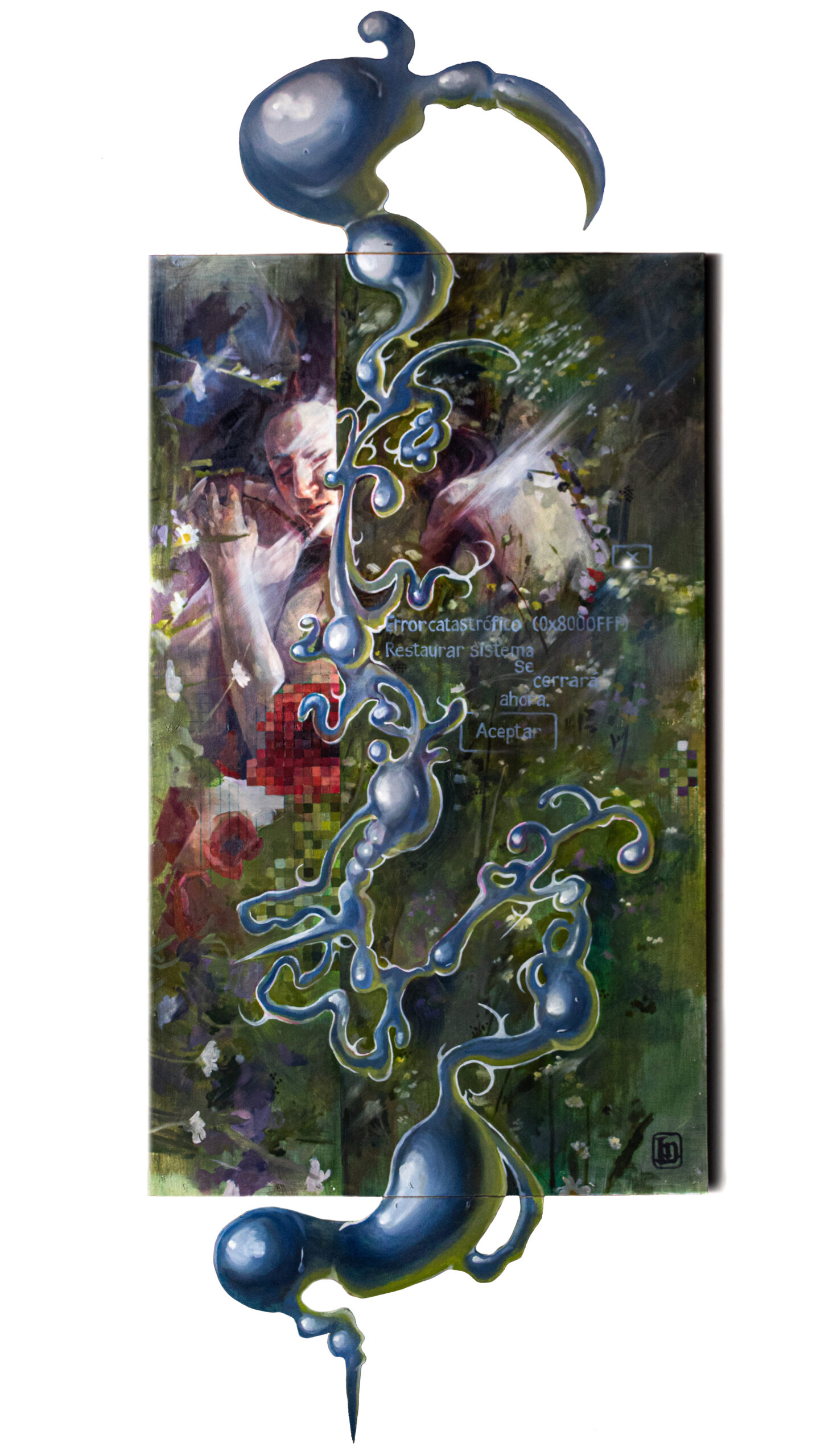
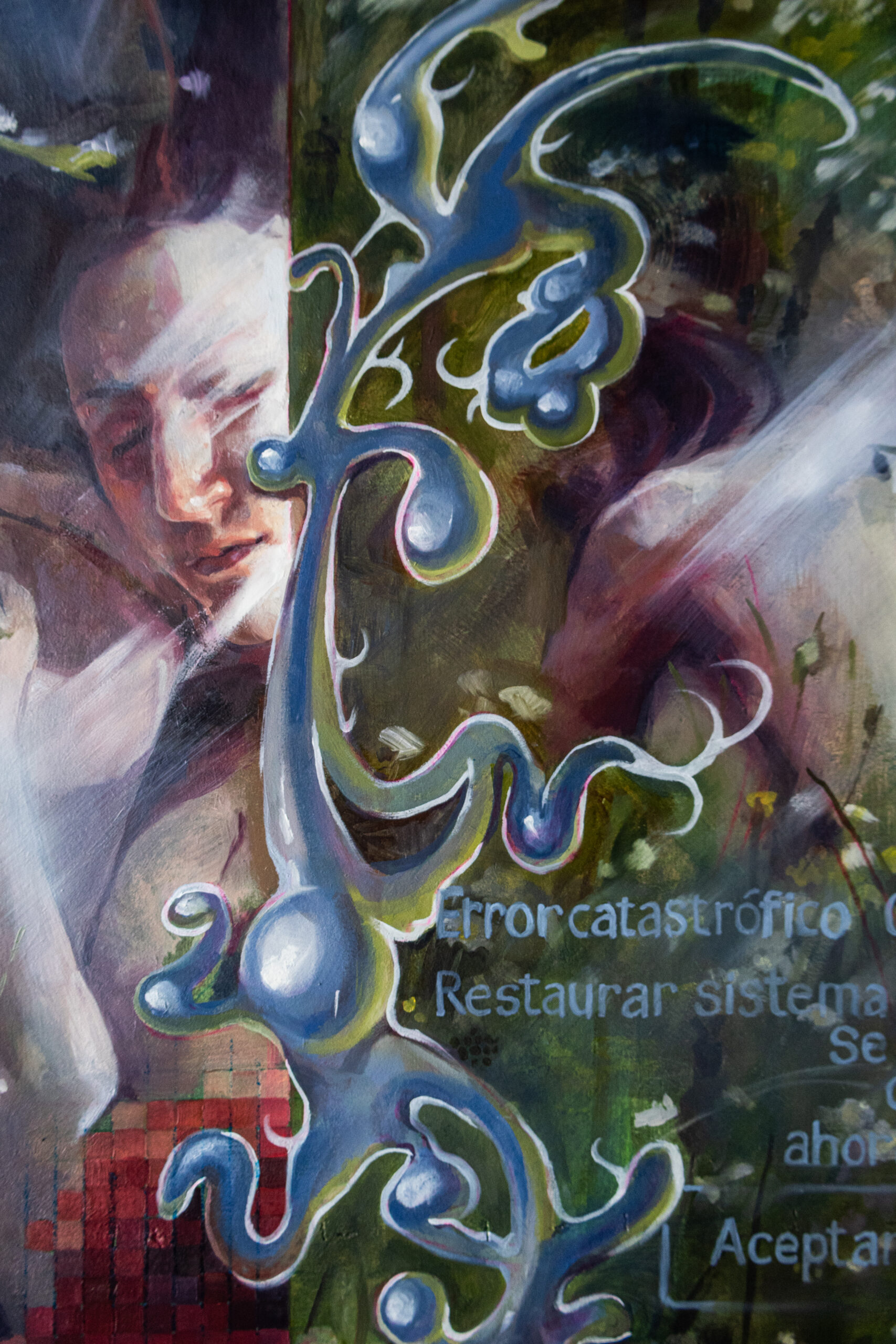
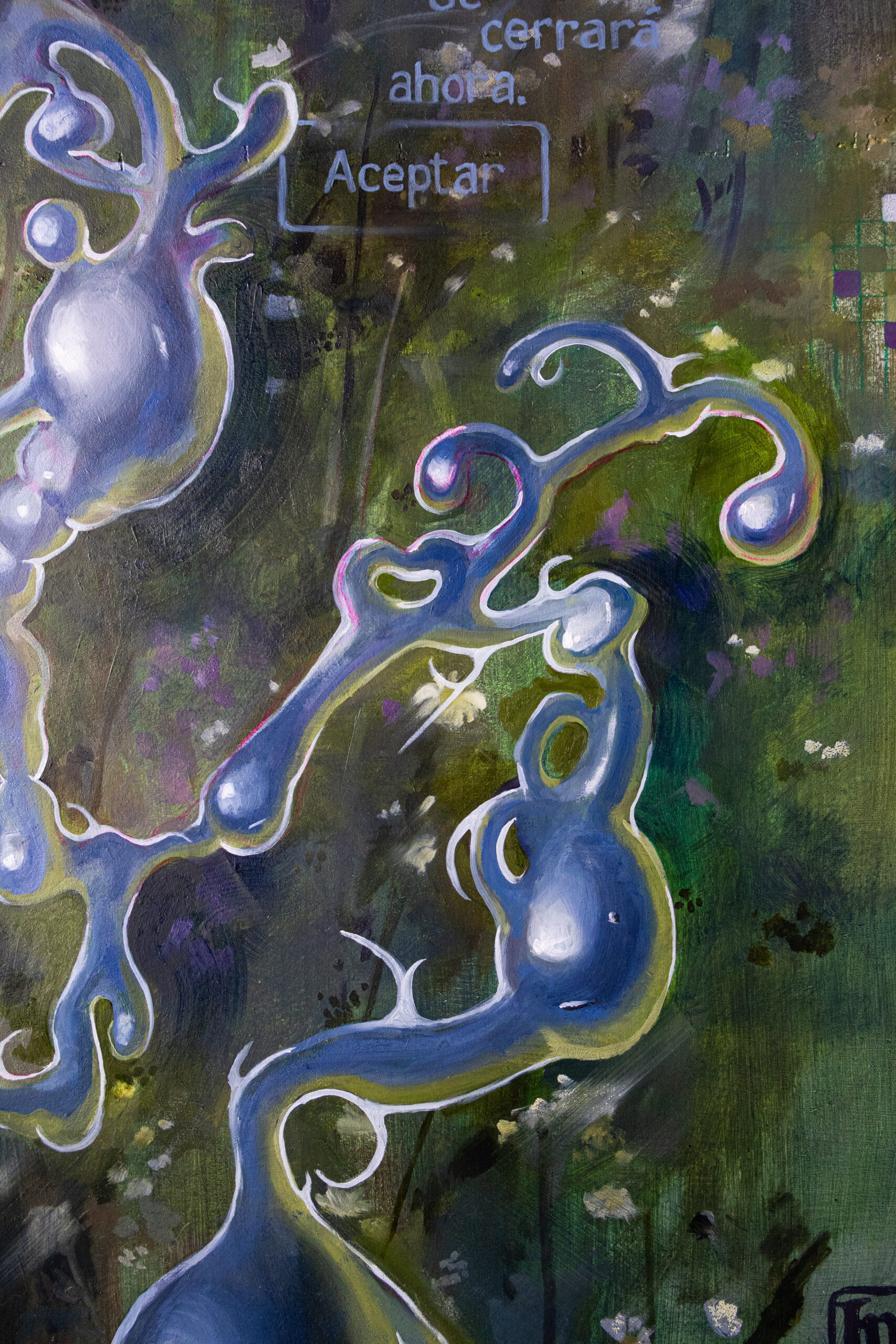
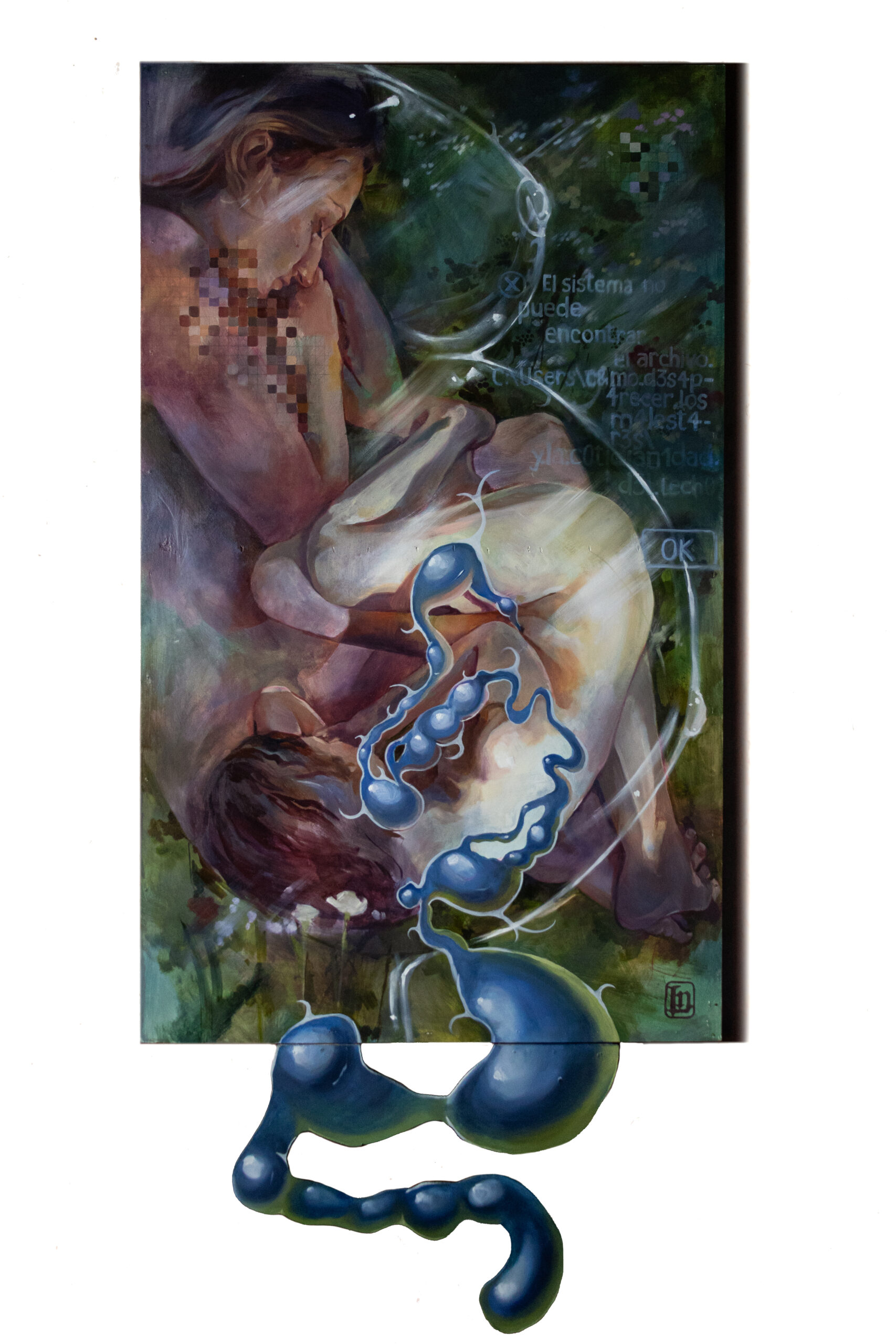
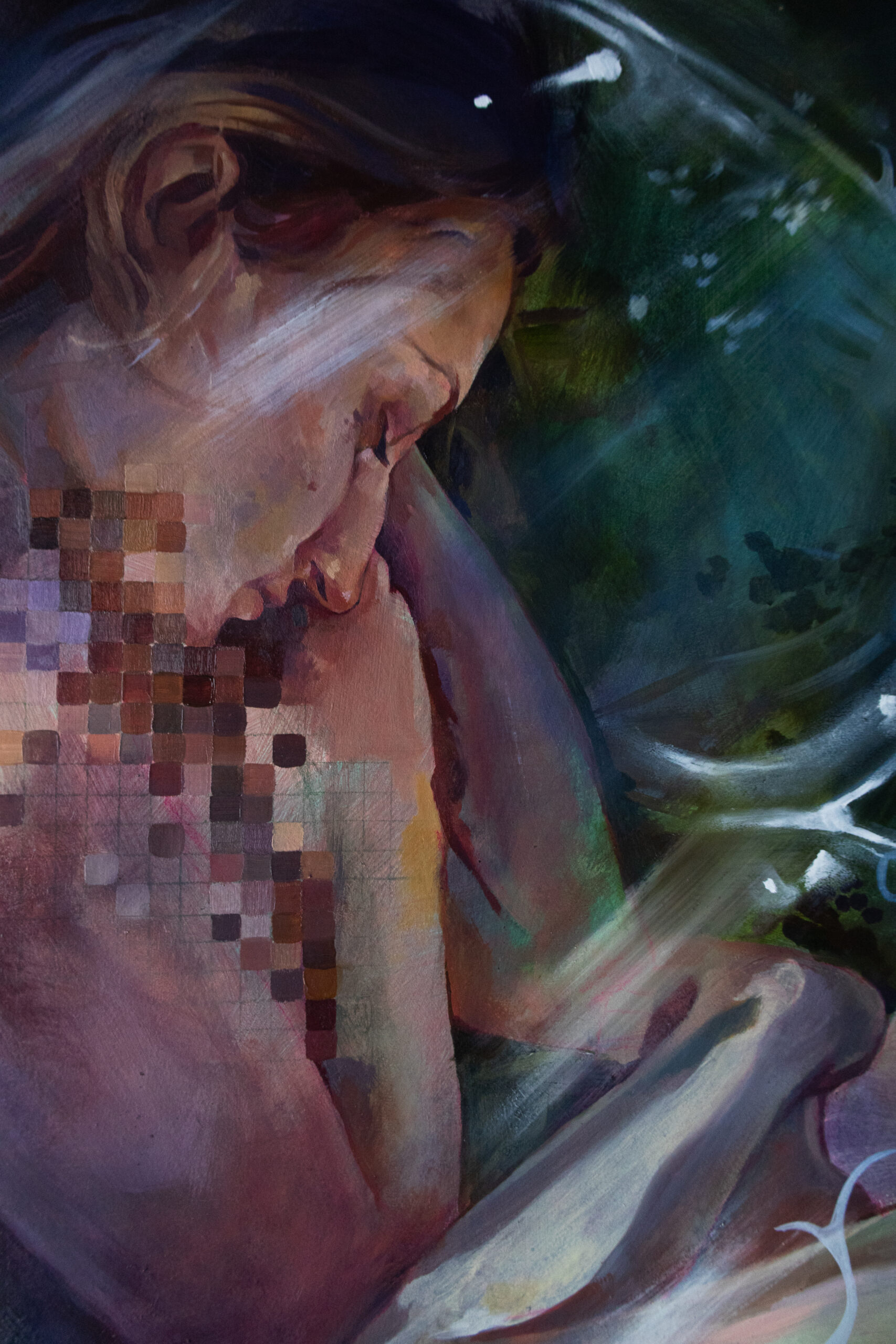
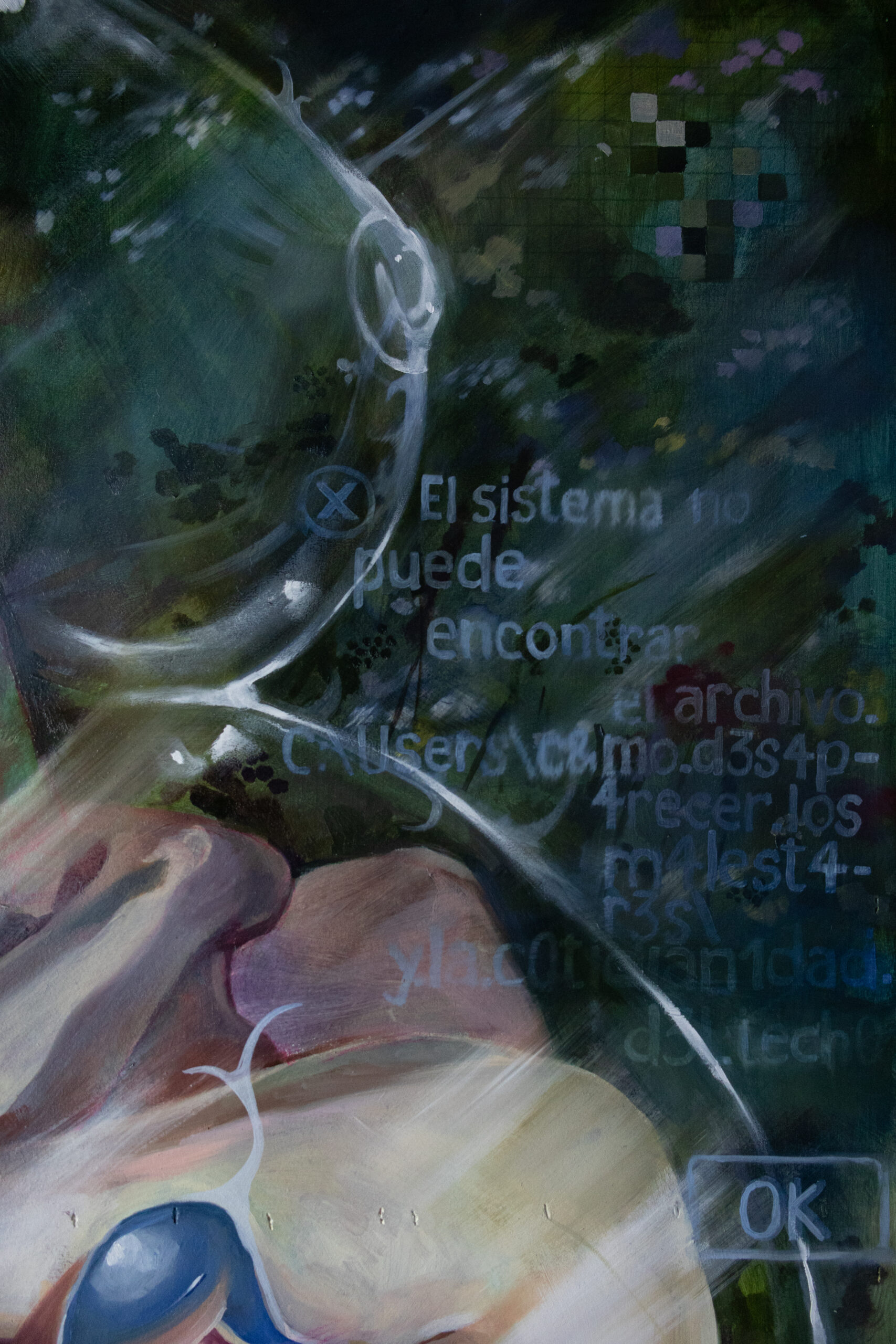
“Un campo en calma”
Óleo sobre tabla
156×61 cm
2025
“En el punto previo a la existencia”
Óleo sobre tabla
133×61 cm
2025
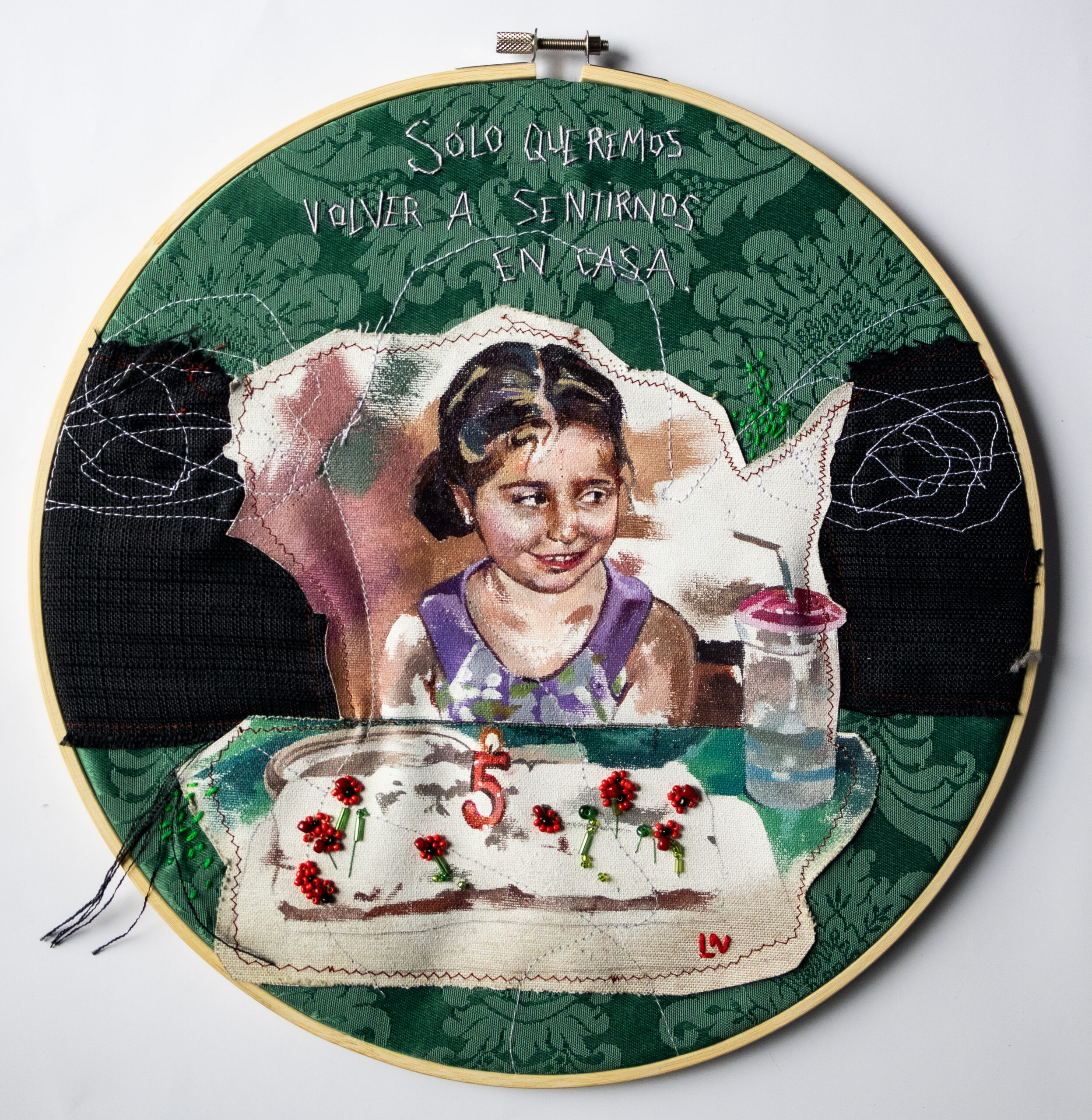
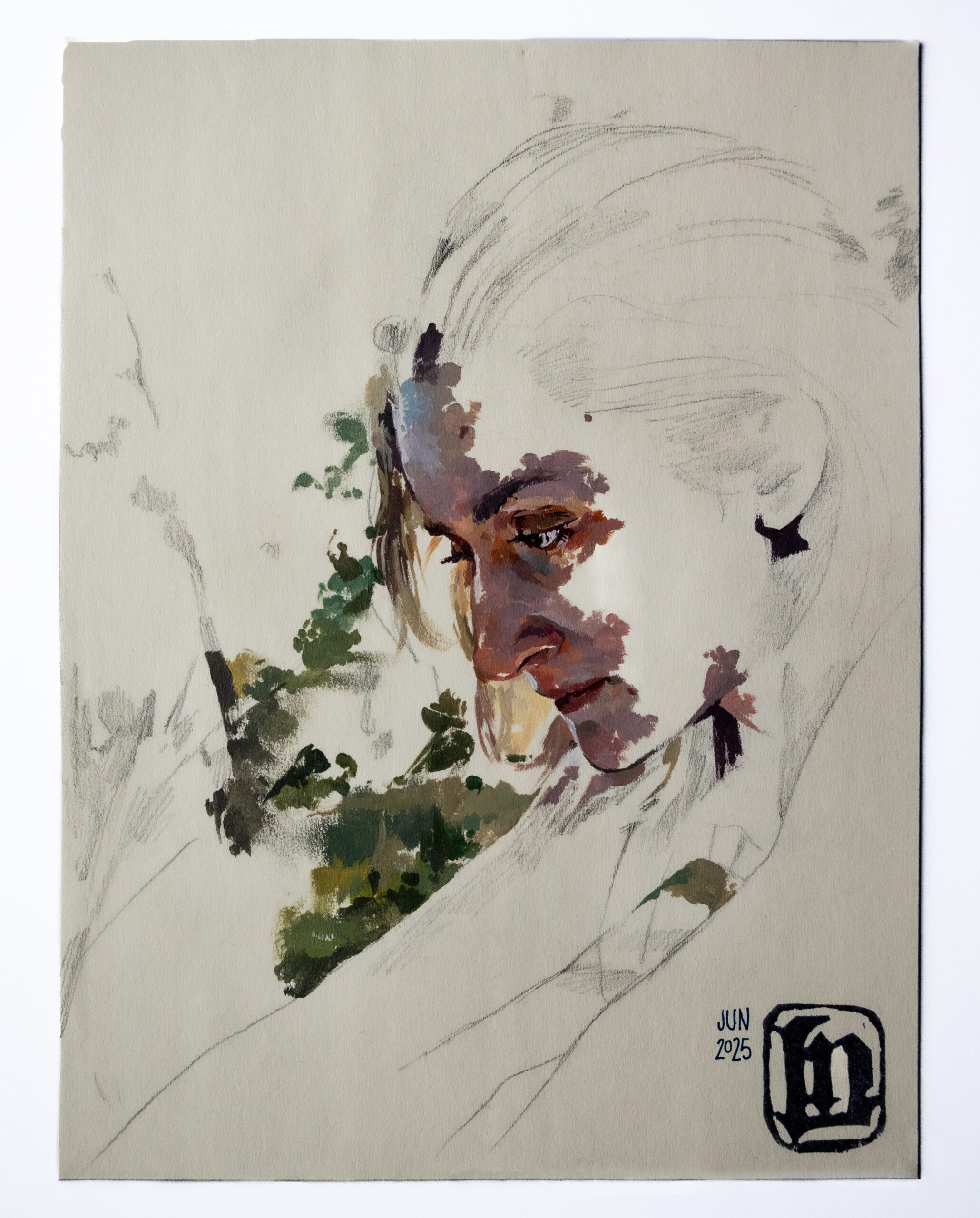
“Un sueño”
Acrílico y bordado sobre tela
30×30 cm
2025
“Ella”
Acrílico sobre papel
18×24 cm
2025
“Ella”
Acrílico sobre papel
18×24 cm
2025
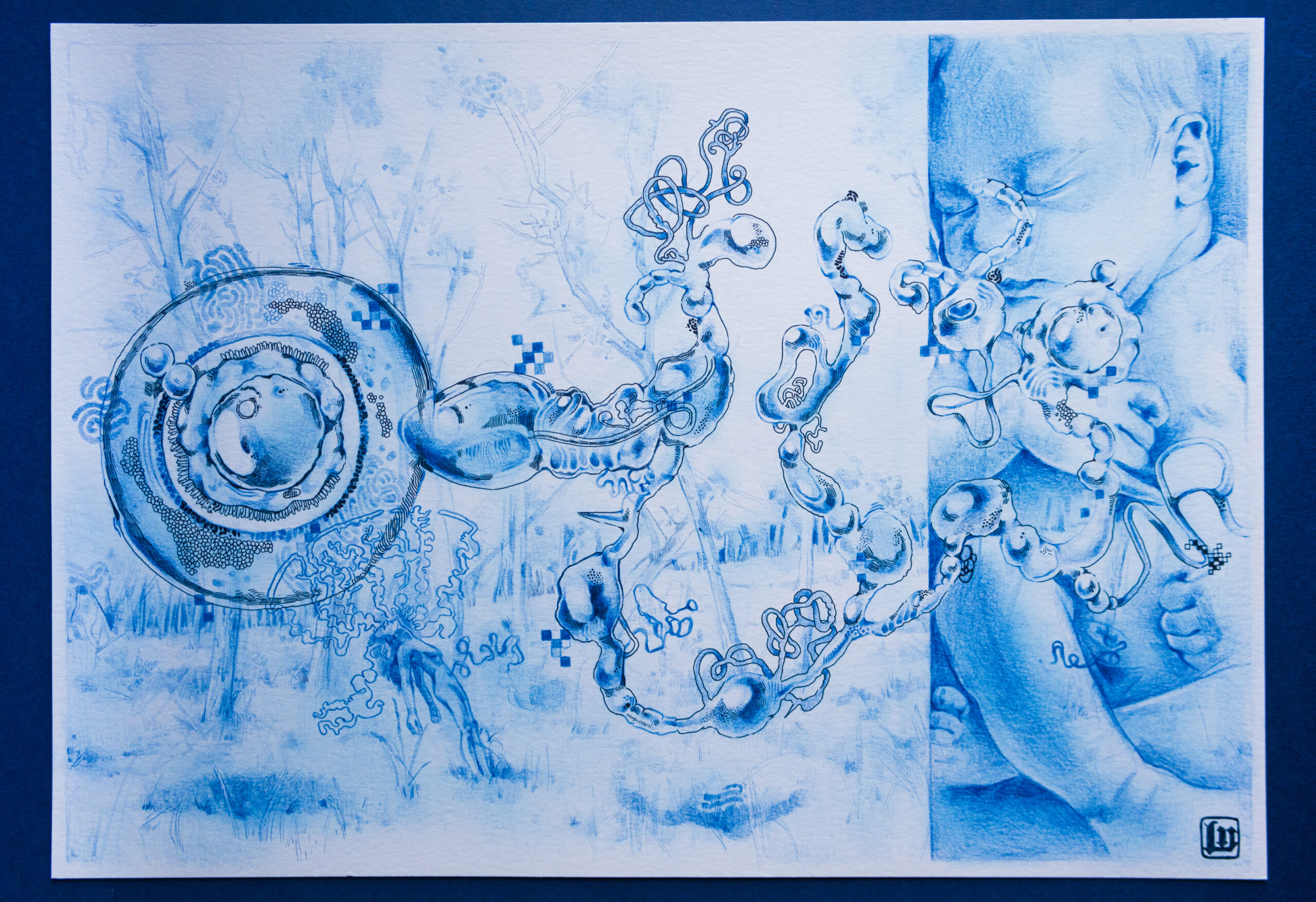
“Parte I. El error primigenio… ”
Lápiz sobre papel
29.7×42 cm
2025
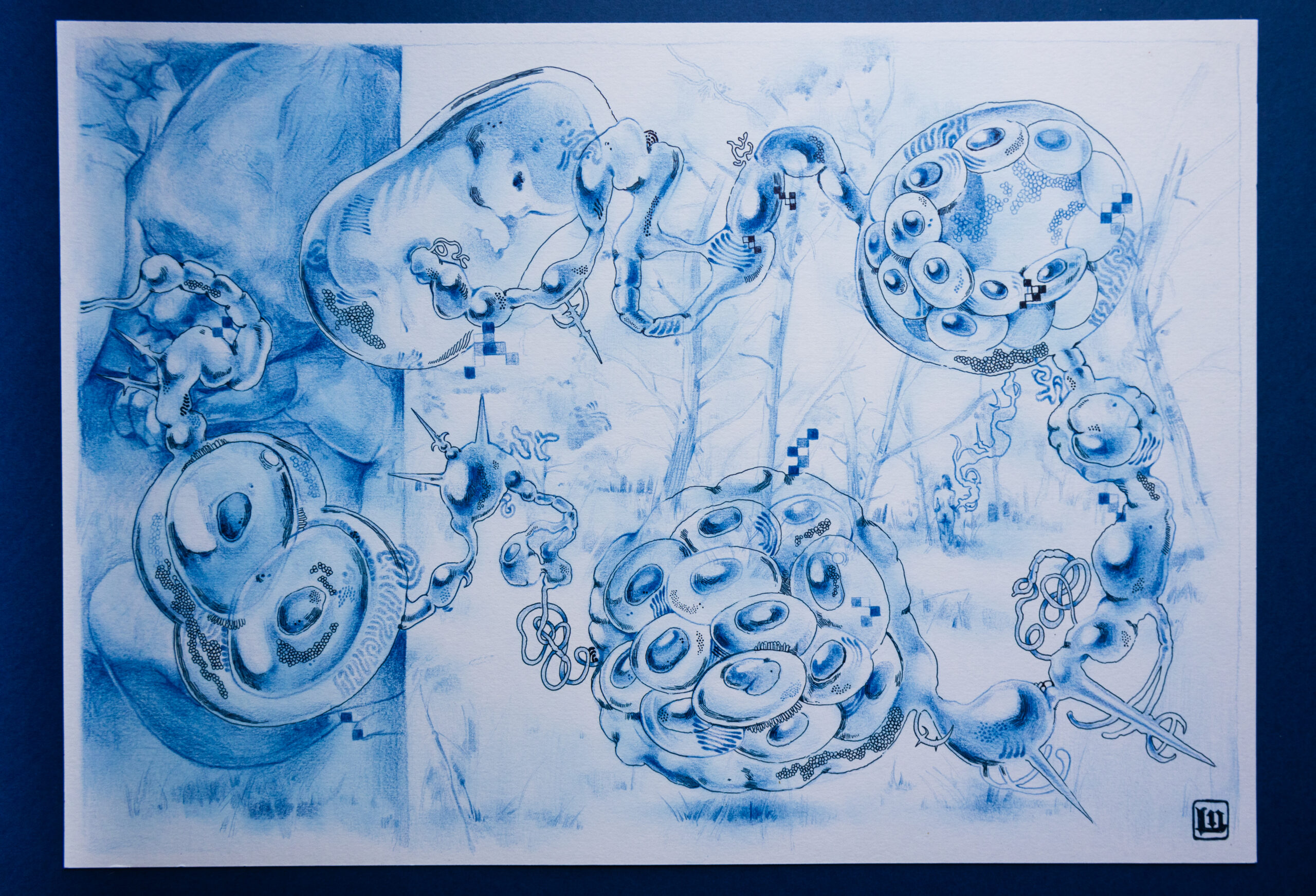
“Parte II…Crece y se propaga…”
Lápiz sobre papel
29.7×42 cm
2025
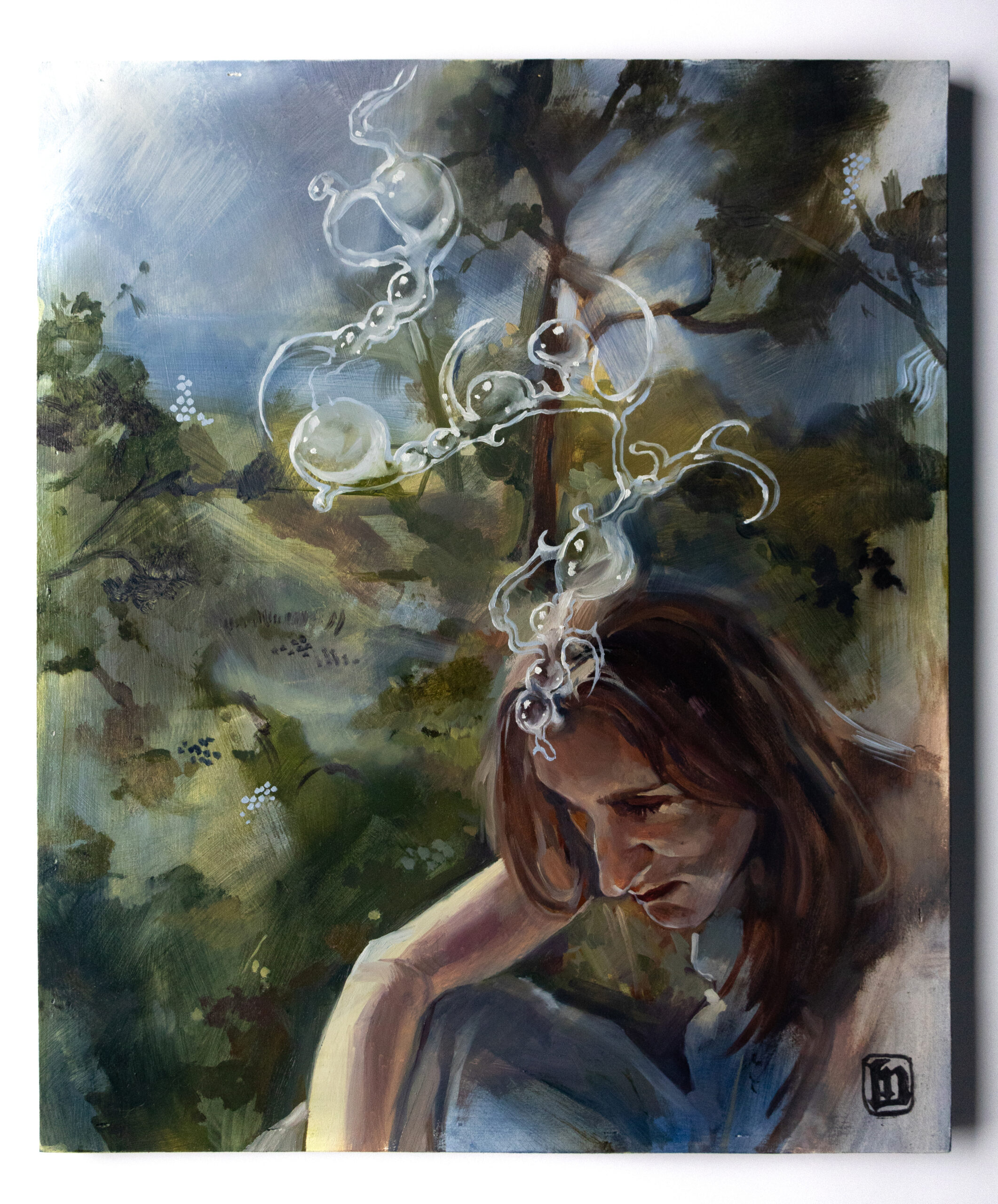
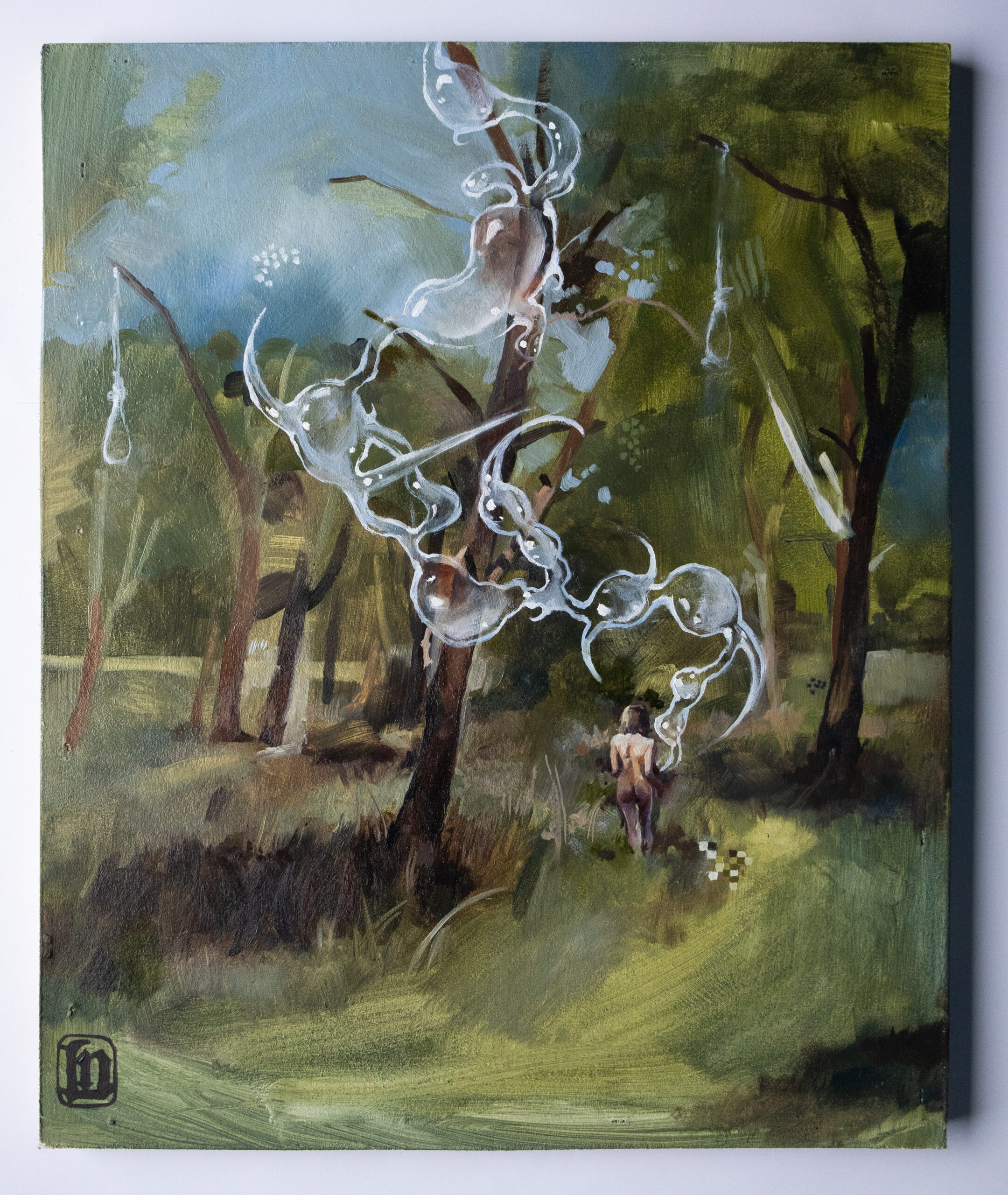
“Añorar recuerdos que no existieron”
Óleo sobre tabla
46x55cm
2025
“Tiempo al tiempo”
Óleo sobre tabla
38×46.5cm
2025
“Tiempo al tiempo”
Óleo sobre tabla
38×46.5cm
2025